
Growing Greener Cities Together

Blog

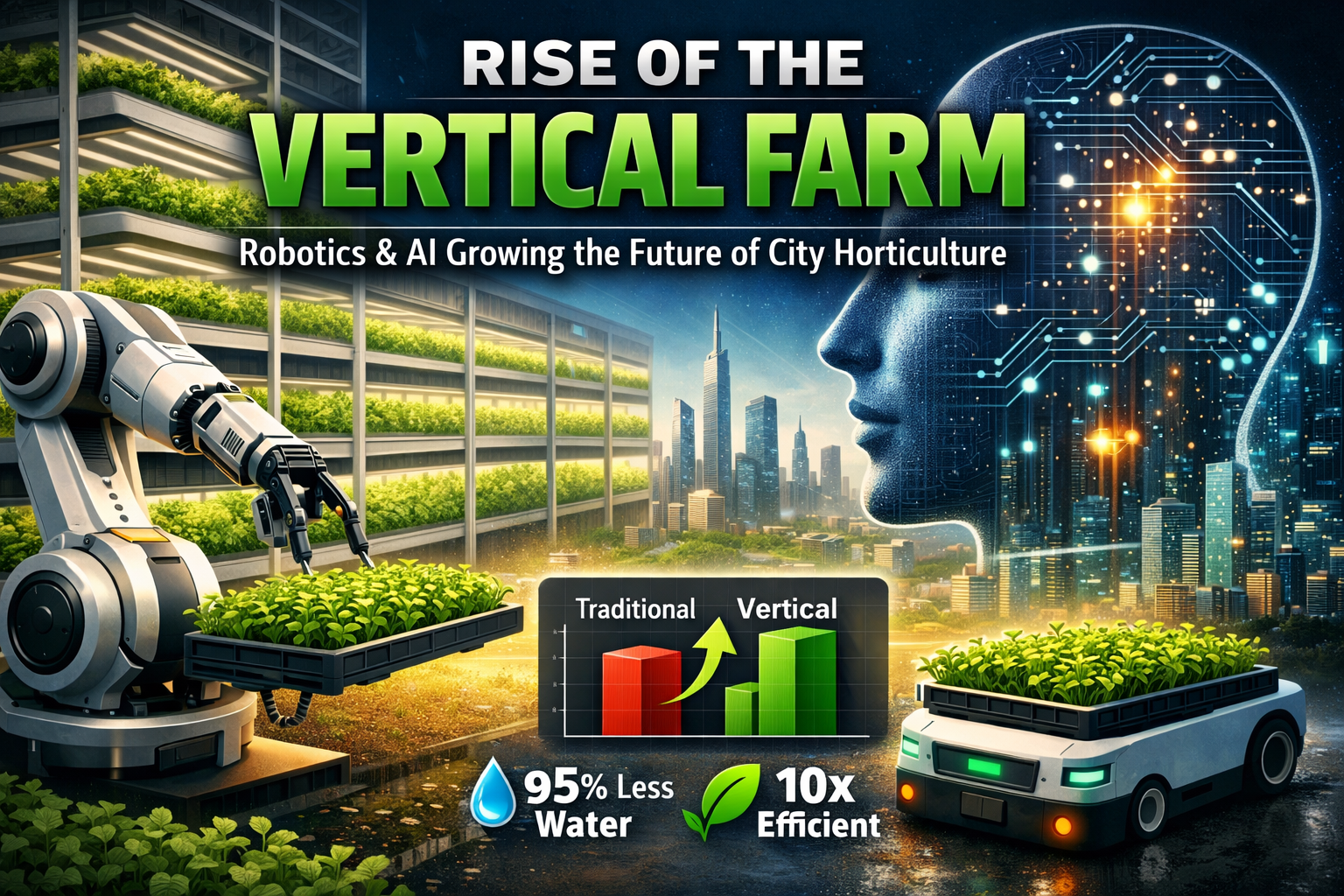
Rise of the Vertical Farm: How Robotics & AI are Engineering the Future of City HorticultureIntroduction: The Green Revolution Goes VerticalBy 2050, nearly 70% of the global population will reside in urban centers. This demographic shift presents a paradox: as cities grow, the land available to feed them shrinks. Traditional “horizontal” agriculture is struggling under the weight of volatile climates and fragile, long-distance supply chains.Enter Vertical Farming. By merging architecture with agronomy and powering it with Artificial Intelligence (AI) and Robotics, we are witnessing a paradigm shift. We are no longer just planting seeds; we are programming harvests.1. The Architecture of Interior GrowthVertical farming isn’t just “shelves with plants.” It is a closed-loop technosphere. Unlike traditional fields, these systems use Hydroponics or Aeroponics—methods that deliver nutrient-rich mist or water directly to roots, bypassing the need for soil.The “Brawn”: Robotics in the FarmIn a high-density vertical stack, human reach is limited. Robotics provide the precision and scale needed to make urban horticulture viable:Automated Seeding & Transplanting: Robotic arms equipped with soft-touch grippers handle delicate seedlings, ensuring a $99%$ success rate in spacing and depth.Selective Harvesting: Using computer vision, robots identify the exact moment of peak nutrient density to harvest, ensuring “perpetual spring” conditions.Autonomous Mobile Robots (AMRs): These units navigate warehouse floors, moving heavy grow-trays to different “climate zones” within the building without human intervention.2. The “Brain”: AI as the Master AgronomistIf robotics provide the labor, AI provides the intelligence. In a vertical farm, every leaf is a data point.Climate Synthesis: AI analyzes real-time sensor data to adjust the “light recipe.” By modulating the blue and red spectrum of LEDs, AI can influence the flavor profile of a plant—making basil spicier or lettuce crunchier.Resource Efficiency: Traditional farming is often a game of “best guesses” with water. AI-driven vertical farms achieve:$$W_{efficiency} = frac{Water_{Traditional}}{Water_{Vertical}} approx 20:1$$This means using 95% less water than conventional methods.Computer Vision (CV): AI-powered cameras detect early signs of stress or leaf discoloration long before the human eye can, preventing crop failure before it starts.3. Data Visualization: The Growth TrajectoryWhile I cannot render a dynamic image file, the following data represents the projected efficiency and market shift between 2024 and 2030.Comparison: Traditional vs. AI-Vertical FarmingMetricTraditional FarmingAI-Vertical FarmingImprovementWater Usage (per kg)~250 Liters~5 – 10 Liters95% ReductionLand Footprint1 Acre1/10th Acre (Stacked)10x EfficiencyPesticide UsageHigh / NecessaryZero (Controlled Env)100% CleanerGrowth Cycle60–90 Days25–40 Days2x FasterSupply Chain1,000+ km< 50 km (Urban)90% Lower Carbon4. The Indian Context: Pune, Mumbai, and BeyondFor a brand like CityMali, the "Rise of the Vertical Farm" isn't just global news—it’s a local solution. Indian cities face unique challenges: high humidity, fluctuating monsoon cycles, and extreme urban density.CityMali’s Strategic Opportunity:Hyper-Local Hubs: Converting underutilized basement parking or warehouse spaces in Pune into "Micro-Farms" for subscription-based greens.The "Smart Terrace": Bridging the gap between hobby gardening and tech by offering AI-assisted nutrient kits for urban households.Resilience: While the heatwaves of May might wither a traditional garden, a vertical system remains a steady $24^{circ}text{C}$, ensuring a consistent supply of premium produce to local B2B partners.5. Navigating the HurdlesWe have to be candid: it’s not all sunshine and LEDs. The Capital Expenditure (CAPEX) remains high. Powering thousands of lights requires a massive energy load, which is why the next frontier for vertical farming is Renewable Energy Integration.As solar efficiency improves and robotic costs drop, the "break-even" point for urban farms is shortening from decades to just a few years.Conclusion: Turning Cities into ProducersThe vertical farm represents the ultimate marriage of biology and technology. We are moving toward a future where our salads are grown three floors above where we eat them, harvested by a robot, and optimized by an algorithm.For CityMali, this is the moment to transition from being a provider of plants to a pioneer of Smart Urban Horticulture. The concrete jungle is about to get a whole lot greener.
Introduction: The Green Revolution Goes Vertical

By 2050, nearly 70% of the global population will reside in urban centres. This demographic shift presents a paradox: as cities grow, the land available to feed them shrinks. Traditional “horizontal” agriculture is struggling under the weight of volatile climates and fragile, long-distance supply chains.

Enter Vertical Farming. By merging architecture with agronomy and powering it with Artificial Intelligence (AI) and Robotics, we are witnessing a paradigm shift. We are no longer just planting seeds; we are programming harvests.

1. The Architecture of Interior Growth

Vertical farming isn’t just “shelves with plants.” It is a closed-loop Technosphere. Unlike traditional fields, these systems use Hydroponics or Aeroponics—methods that deliver nutrient-rich mist or water directly to roots, bypassing the need for soil.

The “Brawn”: Robotics in the Farm

In a high-density vertical stack, human reach is limited. Robotics provide the precision and scale needed to make urban horticulture viable:

  • Automated Seeding & Transplanting: Robotic arms equipped with soft-touch grippers handle delicate seedlings, ensuring a 99% success rate in spacing and depth.
  • Selective Harvesting: Using computer vision, robots identify the exact moment of peak nutrient density to harvest, ensuring “perpetual spring” conditions.
  • Autonomous Mobile Robots (AMRs): These units navigate warehouse floors, moving heavy grow-trays to different “climate zones” within the building without human intervention.

2. The “Brain”: AI as the Master Agronomist

If robotics provide the labour, AI provides the intelligence. In a vertical farm, every leaf is a data point.

  • Climate Synthesis: AI analyses real-time sensor data to adjust the “light recipe.” By modulating the blue and red spectrum of LEDs, AI can influence the flavour profile of a plant—making basil spicier or lettuce crunchier.
  • Resource Efficiency: Traditional farming is often a game of “best guesses” with water. AI-driven vertical farms achieve:

This means using 95% less water than conventional methods.

  • Computer Vision (CV): AI-powered cameras detect early signs of stress or leaf discoloration long before the human eye can, preventing crop failure before it starts.

3. Data Visualization: The Growth Trajectory

While I cannot render a dynamic image file, the following data represents the projected efficiency and market shift between 2024 and 2030.

Comparison: Traditional vs. AI-Vertical Farming

MetricTraditional FarmingAI-Vertical FarmingImprovement
Water Usage (per kg)~250 Liters~5 – 10 Liters95% Reduction
Land Footprint1 Acre1/10th Acre (Stacked)10x Efficiency
Pesticide UsageHigh / NecessaryZero (Controlled Env)100% Cleaner
Growth Cycle60–90 Days25–40 Days2x Faster
Supply Chain1,000+ km< 50 km (Urban)90% Lower Carbon

4. The Indian Context: Pune, Mumbai, and Beyond

For a brand like CityMali, the “Rise of the Vertical Farm” isn’t just global news—it’s a local solution. Indian cities face unique challenges: high humidity, fluctuating monsoon cycles, and extreme urban density.

CityMali’s Strategic Opportunity:

Hyper-Local Hubs: Converting underutilized basement parking or warehouse spaces in Pune into “Micro-Farms” for subscription-based greens.

The “Smart Terrace”: Bridging the gap between hobby gardening and tech by offering AI-assisted nutrient kits for urban households.

Resilience: While the heatwaves of May might wither a traditional garden, a vertical system remains a steady 24’C, ensuring a consistent supply of premium produce to local B2B partners.

5. Navigating the Hurdles

We have to be candid: it’s not all sunshine and LEDs. The Capital Expenditure (CAPEX) remains high. Powering thousands of lights requires a massive energy load, which is why the next frontier for vertical farming is Renewable Energy Integration.

As solar efficiency improves and robotic costs drop, the “break-even” point for urban farms is shortening from decades to just a few years.

Conclusion: Turning Cities into Producers

The vertical farm represents the ultimate marriage of biology and technology. We are moving toward a future where our salads are grown three floors above where we eat them, harvested by a robot, and optimized by an algorithm.

For CityMali, this is the moment to transition from being a provider of plants to a pioneer of Smart Urban Horticulture. The concrete jungle is about to get a whole lot greener.

One Comment

  1. Kashish singh

    Informative article

Leave a Reply

Your email address will not be published. Required fields are marked *